Haus Scallop, Haus Sawtooth
Faux Brick, used two drones to scan the rear elevations of Mies’ houses, which were built for two separate clients on adjacent properties. Like a pair of synchronized swimmers, the drones began their flight path in the southwest top corner of each house systematically scanning the brickwork course by course. Haus Lange and Haus Esters share materiality, proportion and large picture windows. The mass and forms are eerily similar, but are not twins. The bricks are real, but are not load-bearing, rather purely elevational and feel fake.
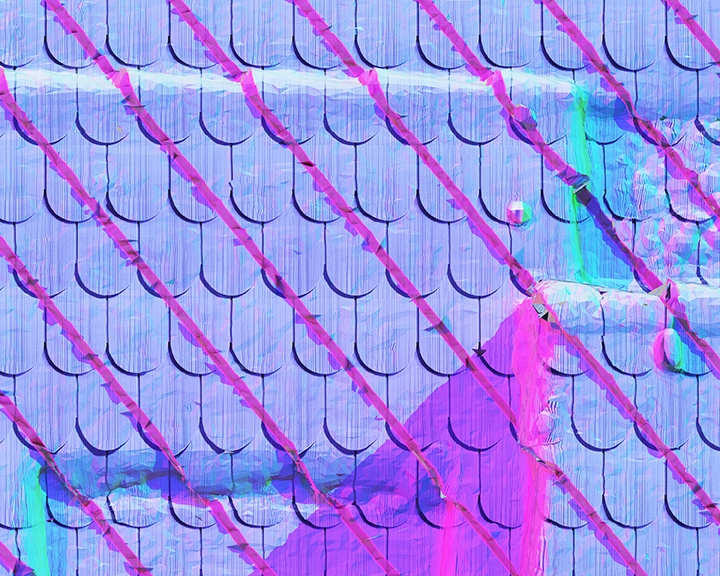
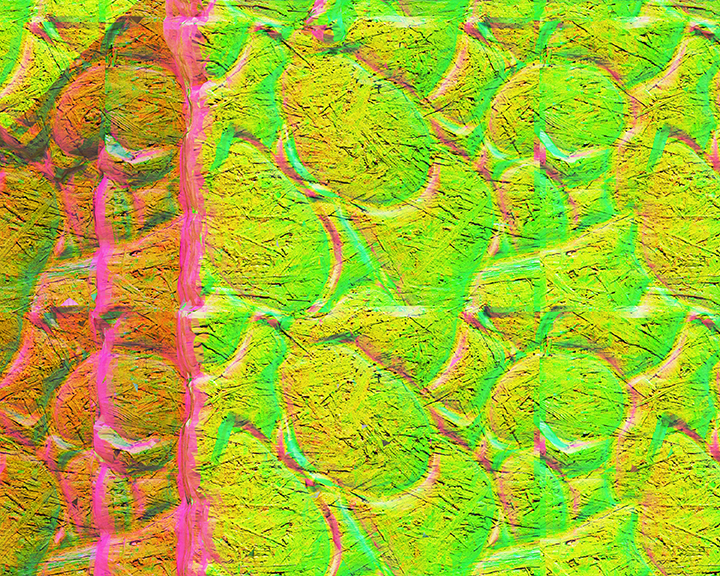
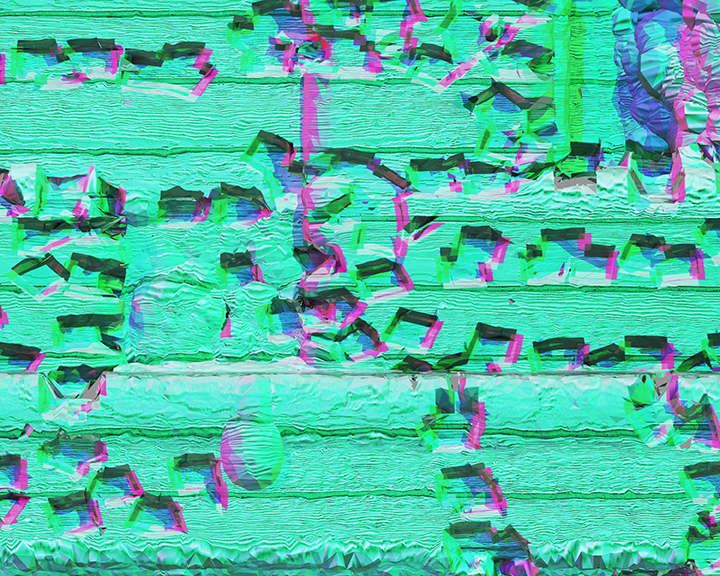
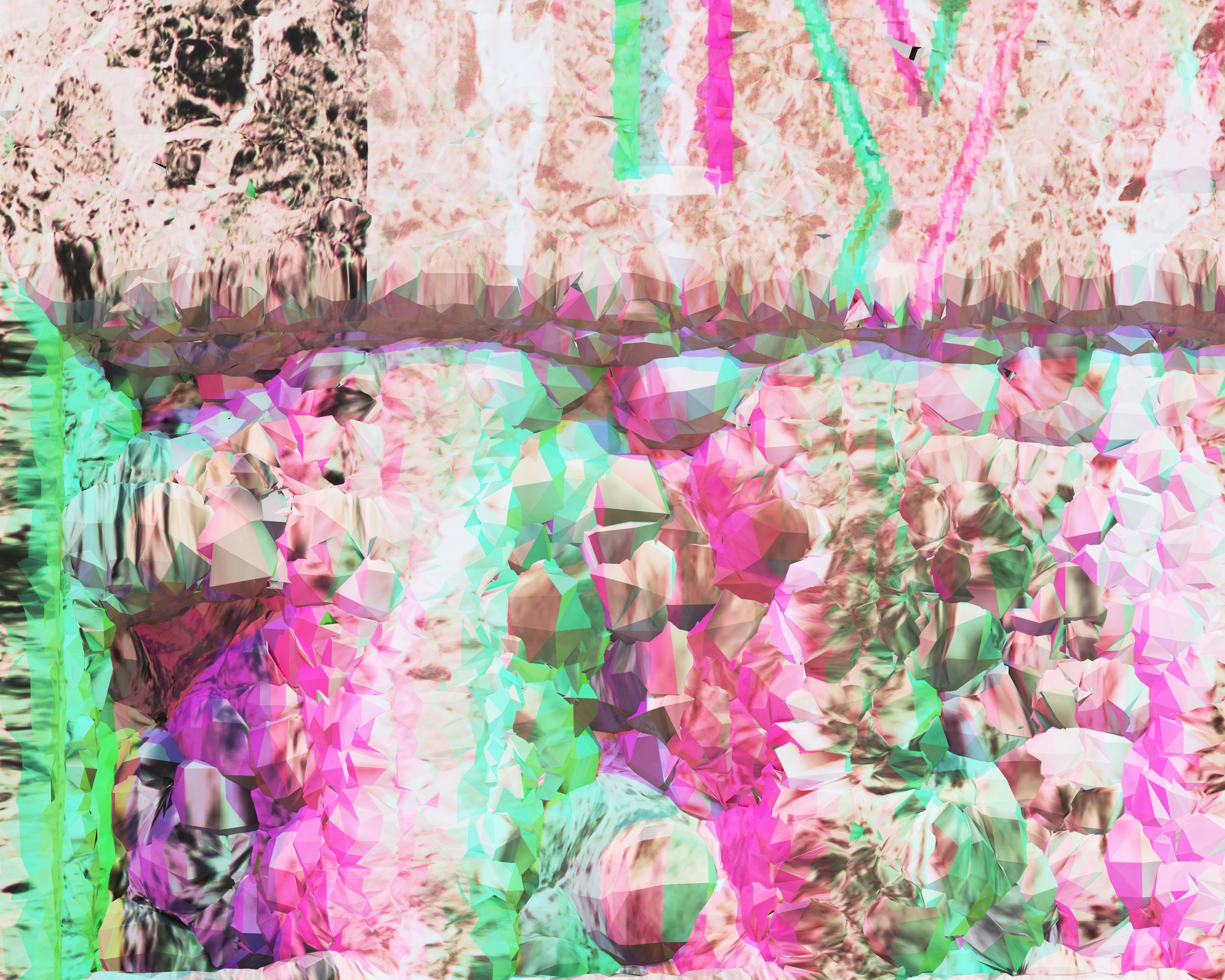
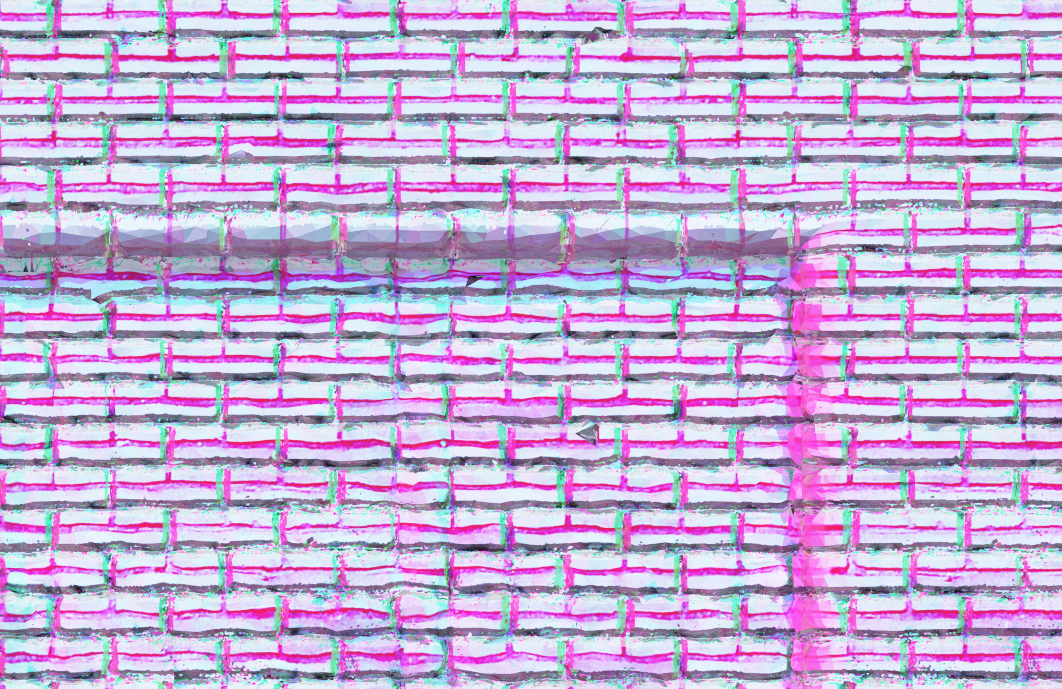
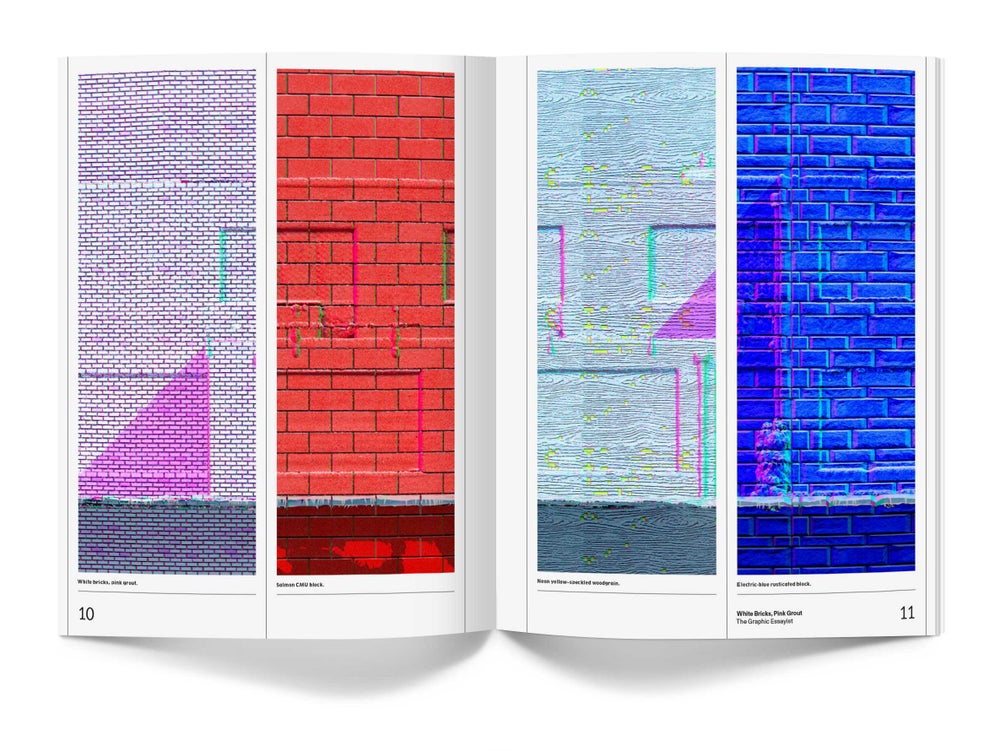
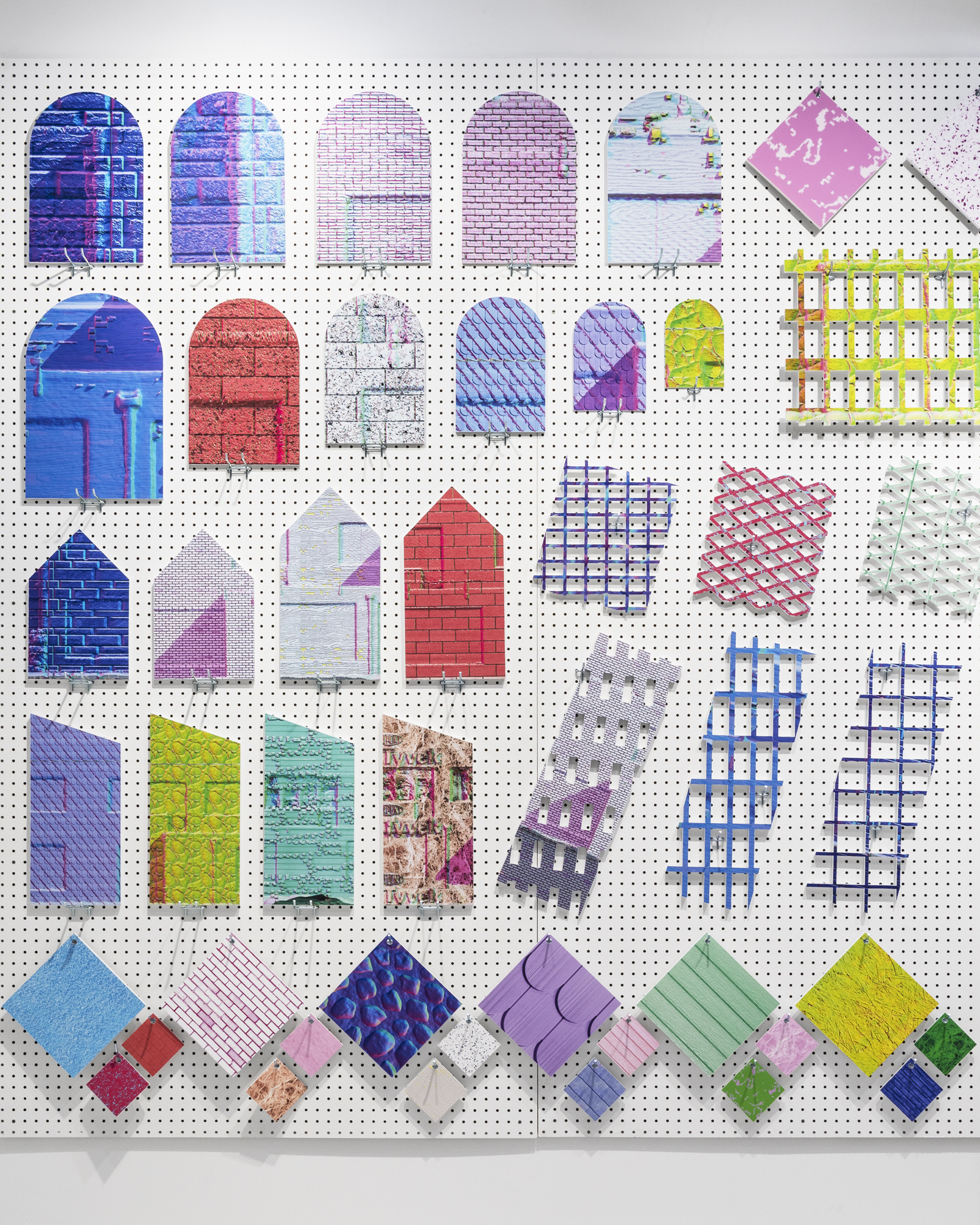
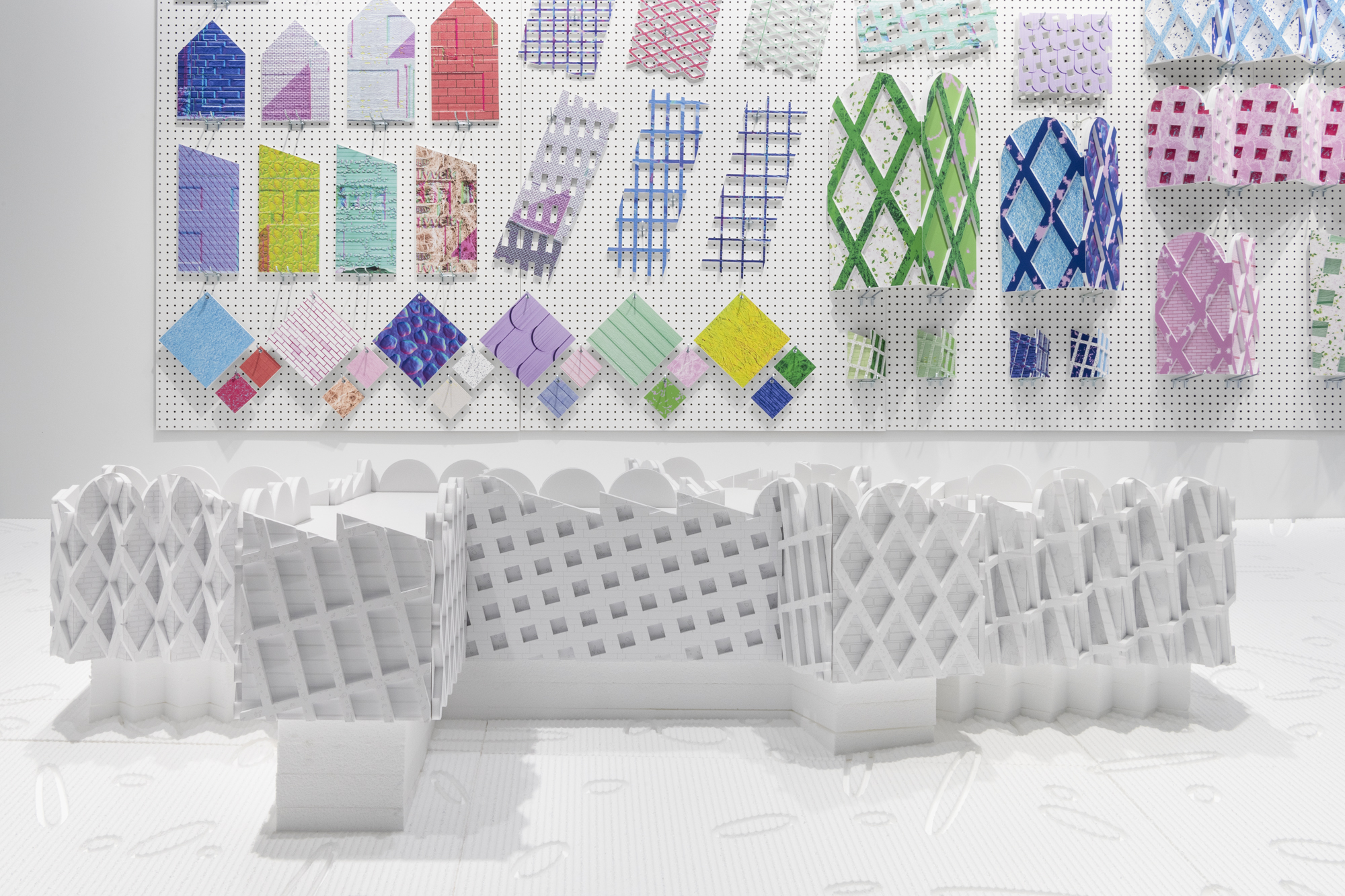
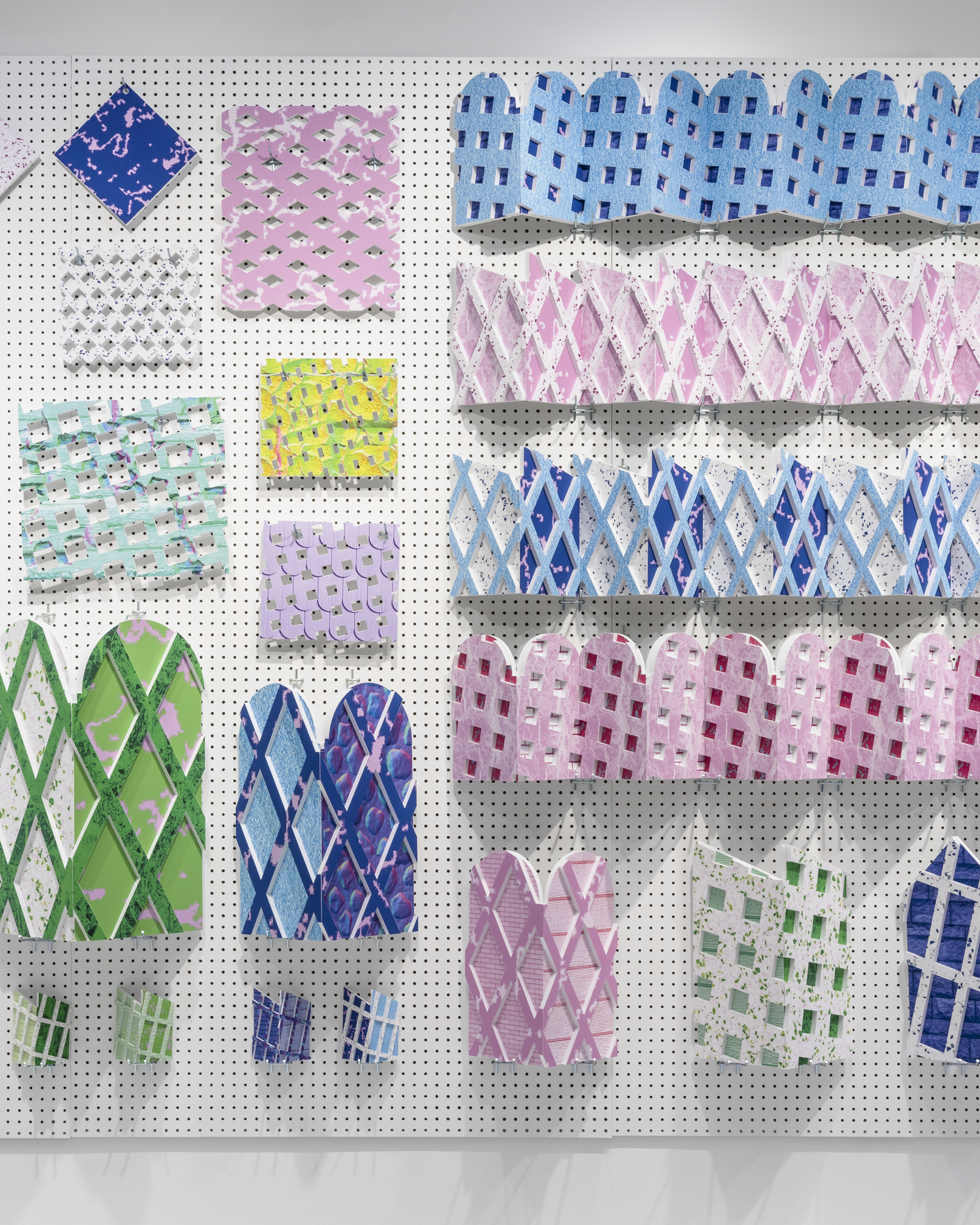
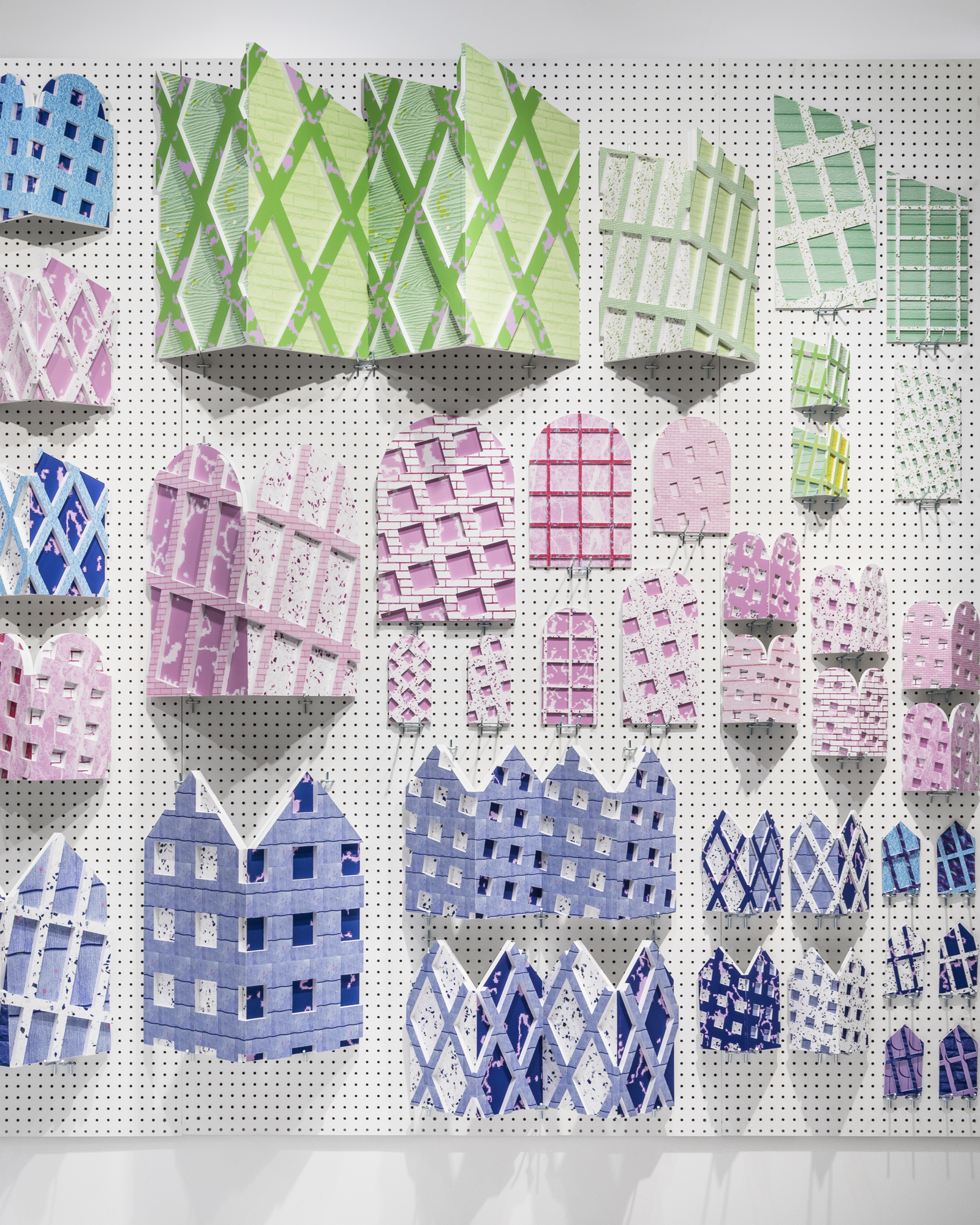
Inspired by this performative intervention, the work on display in the gallery asks questions about the role of contemporary renderings in representation, and places emphasis on the architectural elevation. Footage of the original performance features alongside live drone scans of two new houses, Haus Scallop and Haus Sawtooth. Parapet shapes—scallop and sawtooth—become the defining element for the pair of large models, while easily interchangeable white bricks with pink grout, split fieldstone, and architect’s blue foam applied to their facades replace Mies’ bricks with colorful, rendered alternatives. Here, poorly tiled bitmaps combined with misaligned bump maps (digital modeling techniques used in contemporary architectural renderings) inform a collection of new materials. Examples of material renderings and crenelated elevations are hung on a gallery-sized pegboard to demonstrate the exchangeability of these test renders. The exhibition delights in excessive amounts of elevations. Together, these elements suggest: “Let’s try to build renderings!”
Haus Scallop, Haus Sawtoooth was featured in the fourth issue of Flat Out, an independent print magazine that enacts multiple genres of architectural criticism through fifteen recurring, fictitious characters.